ColonBroom is one of the most heavily marketed fiber supplements of the past few years, and its ads make bold promises about bloating, weight loss, and “cleansing.”
Here is the part the ads do not emphasize: ColonBroom’s active ingredient is plain psyllium husk, the same fiber sold in bulk at any pharmacy for a fraction of the price. That does not automatically make it a bad product. It does mean the honest question is not “does ColonBroom work?” but “what exactly does ColonBroom add to psyllium husk, and is that worth roughly five times the cost?”
This comparison goes through the label, the price math, and what the research on psyllium actually supports. As a note on transparency: this article contains affiliate links, and we may earn a commission if you buy through them, at no extra cost to you.
What Is ColonBroom, Exactly?
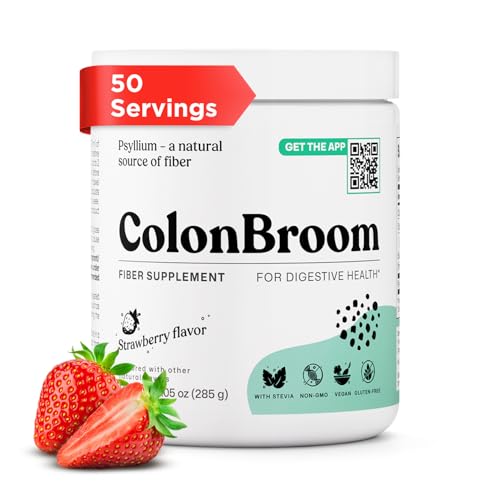
ColonBroom Original is a flavored psyllium husk powder. According to the Supplement Facts panel, one scoop (approximately 5.7 g of powder) contains 3.6 g of psyllium husk powder, 3 g of dietary fiber (2 g soluble), 20 calories, 4 g of carbohydrates, and about 50 to 60 mg of sodium from pink Himalayan sea salt.
The remaining ingredients are flavoring and processing aids: natural flavor, citric acid, stevia leaf extract (rebaudioside A), fruit and vegetable juice powder for color, and organic rice hulls as a flow agent. Strawberry and tropical fruit are the two standard flavors.
The label directs you to mix one scoop into 12 to 14 ounces of water, drink it immediately before it gels, and follow with another glass of water. The company recommends starting with one serving daily for the first several days, then increasing to two.
One important distinction: ColonBroom also sells a “Premium” formula aimed at weight management that adds vitamin B6, vitamin B12, iron, chromium picolinate, L-carnitine, and a cayenne fruit extract. This article compares the Original formula, which is the flagship product. If you are looking at the Premium version, you are evaluating a different ingredient list, and the added ingredients deserve their own scrutiny.
Label Comparison: ColonBroom vs Plain Psyllium
Put the two products side by side and the difference is mostly what has been added, not what psyllium does.
| Per Serving | ColonBroom Original | Plain Psyllium Husk |
|---|---|---|
| Serving size | 5.7 g powder (1 scoop) | ~5 g (1 rounded tsp) |
| Psyllium content | 3.6 g | ~5 g |
| Added ingredients | Flavor, stevia, citric acid, colors, salt, rice hulls | None |
| Sweetener | Stevia (rebaudioside A) | None |
| Taste | Flavored, pleasant | Bland, gritty |
| Typical monthly cost | Roughly $35 to $70 | Roughly $5 to $10 |
Two things stand out. First, plain husk actually delivers more psyllium per serving, since a serving of ColonBroom is about 63 percent psyllium by weight and the rest is flavoring. Second, none of ColonBroom’s added ingredients have meaningful evidence behind them at these amounts. Stevia sweetens, citric acid sharpens the flavor, and the juice powder colors the drink pink. They make the product more pleasant. They do not make it work better.
The Price Math
At the time of writing, a one-month supply of ColonBroom Original (60 servings) costs $69.99 as a one-time purchase on the company website, or $64.99 on a monthly subscription, with three-month and six-month plans bringing the effective monthly price down to roughly $35 to $45. Prices vary with promotions, so check the current figure before buying. ColonBroom is also sold on Amazon, often at prices below the website’s one-time rate and without a subscription.
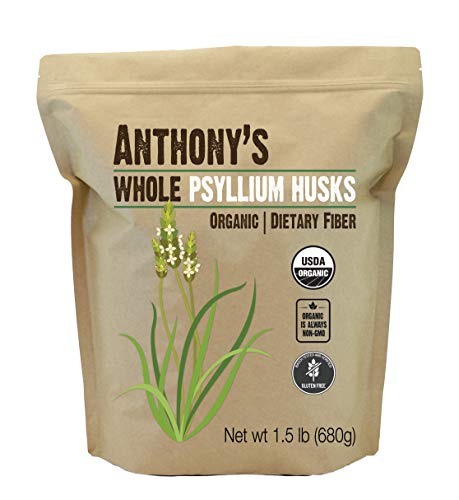
A large bag of plain whole psyllium husk — Anthony’s organic 1.5 lb is the one we recommend most often — typically costs $10 to $15 and lasts one to three months depending on your dose. Per gram of actual psyllium, ColonBroom generally runs four to eight times the price of generic husk, depending on which plan or listing you compare. Our tested psyllium picks compare the leading plain options across formats.
A caution on subscriptions: Many of ColonBroom’s lowest advertised prices are tied to multi-month subscription commitments that renew automatically. If you buy through the company site, read the plan terms before checkout. This is a common source of complaints with subscription supplement brands generally.
Does the Science Support the Claims?
Since ColonBroom’s active ingredient is psyllium, the evidence for ColonBroom is essentially the evidence for psyllium, at the dose the product delivers. That evidence is genuinely strong in some areas and much weaker in the area ColonBroom markets hardest.
Digestive Regularity
This is psyllium’s best-supported use. Psyllium forms a viscous gel that normalizes stool, softening it in constipation and firming it in diarrhea, and it is a standard first-line recommendation for occasional constipation. Studies indicate meaningful improvement for most people within days at doses of roughly 5 to 10 g per day.
If regularity and bloating from constipation are your goals, the fiber in ColonBroom can reasonably be expected to help, because psyllium helps.
Cholesterol and Blood Sugar
Psyllium has an FDA-recognized health claim related to heart disease risk. A meta-analysis of 28 randomized controlled trials found that psyllium lowered LDL cholesterol by a weighted mean difference of about 0.33 mmol/L at a median dose of roughly 10 g per day.
For blood sugar, a meta-analysis of 19 randomized trials found meaningful reductions in fasting glucose and HbA1c in people with type 2 diabetes, with little effect in healthy adults. Note that ColonBroom’s standard one-scoop serving delivers 3.6 g of psyllium, below the doses most of these trials used; you would need the full two-scoop daily regimen to approach them.
Weight Loss
This is where ColonBroom’s marketing runs ahead of the evidence. The research on psyllium and body weight is mixed at best. An industry-funded 2023 meta-analysis reported modest weight reductions at an average dose of about 10.8 g per day, but an independent meta-analysis of 22 randomized trials found no significant effect of psyllium on body weight, and a 2025 independent analysis of 27 trials found no benefit either. We think the independent analyses deserve more weight, and even the favorable one used daily doses well above ColonBroom’s single-scoop serving.
ColonBroom’s own headline evidence is a 10-week self-reported survey of people using its Premium product, which the company itself notes is not a clinical trial and was not conducted on the Original formula. Self-reported surveys without a control group cannot establish that a product causes weight loss. If weight loss is your primary goal, research suggests no psyllium product, branded or plain, is likely to move the needle much on its own.
Dose Check: What You Actually Get
Research on psyllium’s benefits typically used 5 to 15 g per day, often split across meals. One scoop of ColonBroom provides 3.6 g of psyllium; the recommended two scoops provide 7.2 g.
That lands within the studied range for regularity and at the low end for cholesterol effects, but only if you consistently take both daily servings, which also doubles the monthly cost. A rounded teaspoon of plain husk provides about 5 g per serving, so matching the research doses is both easier and cheaper with the generic product. Our dosage guide covers the targets for each goal.
Who Might Reasonably Choose ColonBroom Anyway
An honest comparison should say this plainly: some people should just buy the ColonBroom. Plain psyllium is bland, slightly gritty, and easy to abandon. If a strawberry-flavored version is the difference between taking fiber daily and not taking it at all, the flavored product delivers real value, because consistency is what makes any fiber supplement work.
The premium buys palatability and habit, not a better ingredient. If you know yourself to be someone who quits unpleasant routines, that is a legitimate reason to pay more. If you are happy stirring plain husk into water or a smoothie, there is no evidence-based reason to.
Worth knowing before you commit either way: flavored psyllium is not unique to ColonBroom. Cheaper flavored options exist, and our Metamucil comparison runs the same analysis on the mainstream alternative.
The Bottom Line
ColonBroom is real psyllium husk in a pleasant, heavily marketed, expensive package. The regularity and bloating benefits it advertises are supported by psyllium research, provided you take enough of it. The weight loss framing overstates what independent evidence shows for psyllium at any price.
If taste keeps you consistent, buy the flavored product with clear eyes. If value matters more, plain psyllium husk gives you more of the active ingredient for a fifth of the money.
Check ColonBroom Price on Amazon Shop Plain Psyllium Husk
When to See a Doctor
Fiber supplements are not appropriate for every situation. Talk to a healthcare provider before using ColonBroom or any psyllium product if you:
- Have difficulty swallowing
- Have a history of bowel obstruction or esophageal narrowing
- Have a digestive condition such as diverticulitis or colitis
Psyllium can affect the absorption of medications, so take it at least two hours apart from prescription drugs and ask your doctor or pharmacist about interactions.
Stop use and seek medical advice if constipation lasts more than seven days, if you experience rectal bleeding, or if you have persistent abdominal pain, nausea, or vomiting, as these can be signs of a more serious condition.
Further Reading
- Effect of psyllium on LDL cholesterol, non-HDL cholesterol, and apolipoprotein B: meta-analysis of 28 RCTs (PubMed)
- Psyllium and glycemic control: meta-analysis of 19 randomized trials (PubMed)
- Darooghegi Mofrad M et al. Psyllium and body weight, BMI, and waist circumference: meta-analysis of 22 RCTs. Crit Rev Food Sci Nutr, 2020 (independent)
- Gholami Z, Paknahad Z. Psyllium and anthropometric indices: dose-response meta-analysis of 27 RCTs. J Health Popul Nutr, 2025 (independent)
- Psyllium (MedlinePlus, National Library of Medicine)