Capsules look like the obvious upgrade. No gritty texture, no gelling glass to race against, no measuring. The reason most people still end up with powder is arithmetic.
The honest comparison comes down to how much psyllium a capsule can actually hold, and what that means once you multiply it by a real daily dose. This article does that math, then covers where capsules genuinely win.
As a note on transparency: this article contains affiliate links, and we may earn a commission if you buy through them, at no extra cost to you.
The Short Answer
Powder is the practical choice for daily use at studied doses. Capsules are a convenience product for travel, for people who cannot tolerate the drink, and for anyone taking a small maintenance dose rather than a therapeutic one.
Both contain the same active ingredient. Neither is more effective per gram. The difference is entirely in how many you have to swallow and what you pay per gram of fiber.
The Math Nobody Puts on the Label
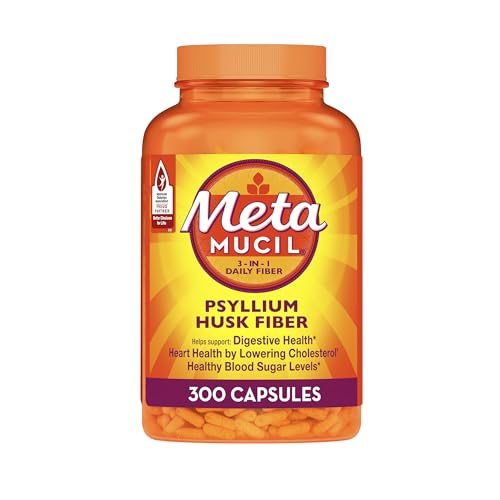
Metamucil publishes clear figures for its own products, and they are useful because the same brand sells both forms. According to Procter and Gamble’s clinical materials, Metamucil powder delivers approximately 2.4 g of soluble fiber per serving, while the capsules deliver 1.8 g — and five capsules make up one capsule serving (P&G Science Behind).
That ratio is the whole story. One rounded teaspoon of powder does the work of five capsules, with more fiber left over.
Now scale it to a dose that matters. The FDA’s authorized health claim for psyllium and heart disease requires 7 g of soluble fiber per day from psyllium husk (21 CFR 101.81). Reaching that threshold means:
| Form | Soluble fiber per serving | Servings for 7 g/day | Units swallowed |
|---|---|---|---|
| Powder | ~2.4 g | 3 | 3 teaspoons |
| Capsules | ~1.8 g (5 capsules) | 4 | ~20 capsules |
Twenty capsules a day, spread across four servings, versus three teaspoons. That is not a marketing framing; it follows directly from the manufacturer’s own numbers.
Generic capsules vary — fills of 500 mg to 750 mg of psyllium husk are common — but the conclusion holds. No capsule can hold a teaspoon of a bulky, low-density fiber.
Cost Per Gram Is the Other Gap
Encapsulation adds manufacturing cost, and you are paying for the shell as well as the fill. Rather than quote prices that go stale, here is the calculation to run yourself on any two products:
- Find total grams of psyllium in the container. For powder, servings per container × grams per serving. For capsules, capsule count × mg per capsule ÷ 1000.
- Divide the price by that number. You now have cost per gram.
- Multiply by your intended daily grams to get cost per day.
Run it on a large powder tub against a bottle of capsules and the gap is usually several-fold, not marginal. The supplement roundup applies the same method across formats.
Where Capsules Genuinely Win
The math is lopsided, but it is not the only consideration.
Travel: A bottle of capsules survives a suitcase. A tub of powder plus a measuring spoon plus a shaker does not, and airport water is easier to find than a mixing vessel.
Texture intolerance: Some people genuinely cannot get psyllium drink down. A supplement you skip has an effectiveness of zero, and capsules you actually take beat powder you avoid.
Maintenance doses: If you are taking 2 to 3 g daily for general regularity rather than 7 to 10 g for cholesterol or glucose, the capsule count is manageable and the cost difference is smaller in absolute terms.
Precision without a scale: Each capsule is a fixed amount. Powder scooping varies with how packed the spoon is, which matters if you are titrating carefully.
Where Powder Wins
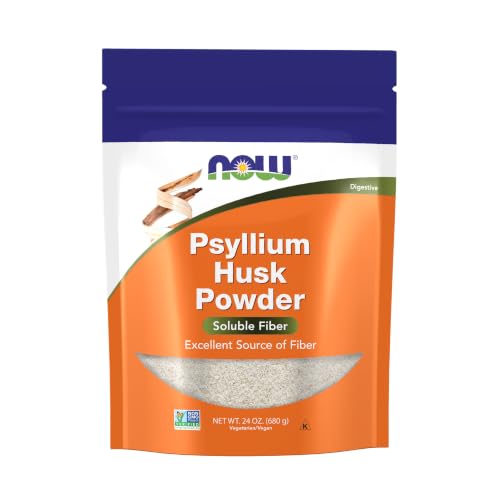
Any studied dose: The trials behind psyllium’s evidence for cholesterol and blood sugar used roughly 10 g per day. That is 3 to 4 teaspoons, or somewhere north of 20 capsules.
Cost: Consistently and substantially cheaper per gram.
Cooking and baking: Capsules are useless in the kitchen. Powder is what makes gluten-free baking work.
The gel forms before you swallow it: This matters more than it sounds, and it leads directly into the safety section.
The Safety Difference Worth Understanding
With powder, you mix psyllium into a full glass of liquid and drink it. The fiber has already met its water before it reaches you.
With capsules, the psyllium is dry when swallowed and hydrates somewhere in your esophagus or stomach. This is why capsule labels carry explicit warnings about taking each dose with a full glass of liquid, and why choking and obstruction warnings appear on psyllium products generally.
Practical implication: If you take capsules, drink at least 8 ounces of water with them, every time, and do not take them lying down or immediately before bed. Swallowing twenty dry capsules across a day requires deliberate hydration that the powder route enforces automatically.
Medication timing applies to both: Psyllium in any form can slow the absorption of oral medications. Keep a two-hour gap either side; our drug interactions guide covers the specifics.
What to Look for If You Buy Capsules
If capsules fit your situation, the same selection criteria apply as for any psyllium product, plus two extras.
Psyllium content per capsule: Stated on the label in mg. This is the number that determines your capsule count, and it varies enough between brands to matter.
Single ingredient: The fill should be psyllium husk and nothing else. Flow agents and fillers displace fiber you are paying for.
Capsule shell: Gelatin shells are animal-derived. Look for vegetarian or HPMC capsules if that matters to you — it is rarely on the front of the bottle.
Count versus dose: A 200-capsule bottle sounds generous until you divide by twenty per day.
When to See a Doctor
Form choice is usually a preference question, but some situations warrant medical input first. Talk to a healthcare provider if you:
- Have difficulty swallowing pills or a history of esophageal narrowing, in which case capsules are the wrong format
- Have a history of bowel obstruction or any structural digestive condition
- Take prescription medications and are unsure how to schedule psyllium around them
- Are increasing to a therapeutic dose for cholesterol or glucose management
Difficulty swallowing is the one that most directly rules out a format. Psyllium capsules are bulky, and a dose is many of them.
Stop and seek advice if you experience chest pain, difficulty swallowing, or vomiting after taking psyllium in any form. These can indicate the gel has lodged somewhere it should not have.
The Bottom Line
Capsules and powder deliver the same fiber. Capsules just deliver much less of it per unit, at a higher price per gram, which is why powder remains the default for anyone taking psyllium seriously.
Buy capsules if the alternative is not taking psyllium at all, or if you need something portable for a few weeks a year. Buy powder for everything else, and keep a small bottle of capsules for travel if that is the friction point.