Most people only ever see psyllium as a pale powder or a tub of fluffy flakes. It starts life as a small, unremarkable-looking herb whose seeds carry a thin coating that swells in water. That coating is the psyllium husk sold in stores and used in baking.
This guide covers the plant itself: what it looks like, the species involved, where it is grown, how it is harvested, and how the husk is separated from the seed. If you have wondered about the difference between psyllium seed and psyllium husk, the answer is here too.
The Short Answer
Psyllium husk comes from Plantago ovata, a small annual herb in the plantain family, often called blond psyllium. It grows about 12 to 18 inches tall, produces narrow leaves and spikes of tiny white flowers, and sets very small seeds. Each seed is wrapped in a thin outer coating, the husk. After harvest, the seeds are run through grinding mills that strip off the husk, which makes up roughly a quarter to a third of the seed’s weight. India, mainly the state of Gujarat, grows most of the world’s supply.
| Fact | Plantago ovata (blond psyllium) |
|---|---|
| Plant family | Plantaginaceae (plantain family) |
| Type | Annual herb |
| Height | About 12 to 18 inches |
| Flowers | Small and white, on spikes, about 60 days after planting |
| Crop length | About 119 to 130 days |
| Seed size | 1,000 seeds weigh less than 2 grams |
| Husk share of seed | About 25 to 30 percent by weight |
| Main growing region | North Gujarat, India |
What the Psyllium Plant Looks Like
Plantago ovata is a low, tufted herb. According to the University of Wisconsin’s Alternative Field Crops Manual, it grows to 12 to 18 inches, with narrow, linear leaves and a well-developed taproot. About 60 days after planting it sends up spikes covered in numerous small white flowers, and each flower produces tiny seeds.
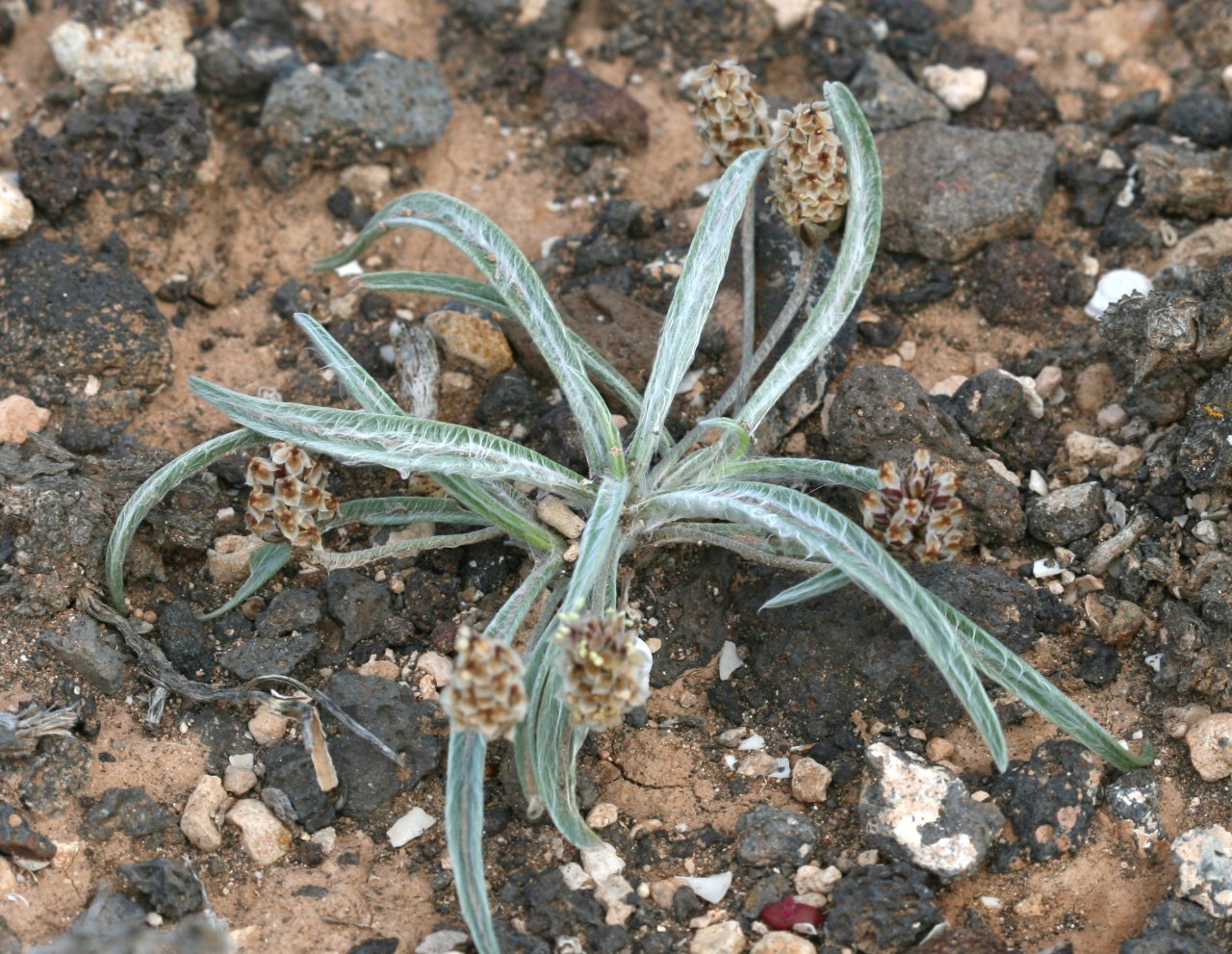
The seeds are remarkably small. The same manual notes that 1,000 seeds weigh less than 2 grams. Each one is wrapped in the thin husk that gives the crop its value.
The Species Behind Psyllium
The Plantago genus contains more than 200 species, but only a few are grown for psyllium. Plantago ovata, the white or blond psyllium also known as isabgol, is the main commercial species, and its seeds carry the most mucilage, the gel-forming part of the husk.
Black psyllium, also called French or Spanish psyllium, comes from related species. The University of Wisconsin manual names Plantago psyllium and Plantago arenaria. Those names have shifted over time: the European Medicines Agency lists them alongside Plantago afra and Plantago indica, and Kew treats Plantago psyllium as a synonym of Plantago arenaria. These have darker seeds. Plantago ovata is the species commonly used in commercial psyllium products. Our guide to isabgol, ispaghula and psyllium husk explains the different names.
Where Psyllium Is Grown
Kew’s Plants of the World Online gives the native range of Plantago ovata as southeastern Spain and North Africa east to India and Somalia, plus the southwestern and south-central United States into northern Mexico. Some references instead list the North American plants as naturalized. Commercial production, though, is concentrated in India, which is the world’s largest producer and exporter. The Alternative Field Crops Manual describes it as grown mainly in North Gujarat as a rabi crop, the post-monsoon season from October to March. India’s Vikaspedia agriculture portal also lists Punjab and Uttar Pradesh as growing areas.
Production has been tried elsewhere. The same manual notes that research in the United States took place mainly in Arizona, and that the growing season in states such as Wisconsin and Minnesota is not likely to suit the crop.
From Field to Husk
Turning the plant into the husk you buy takes a few stages, from the field to the mill.
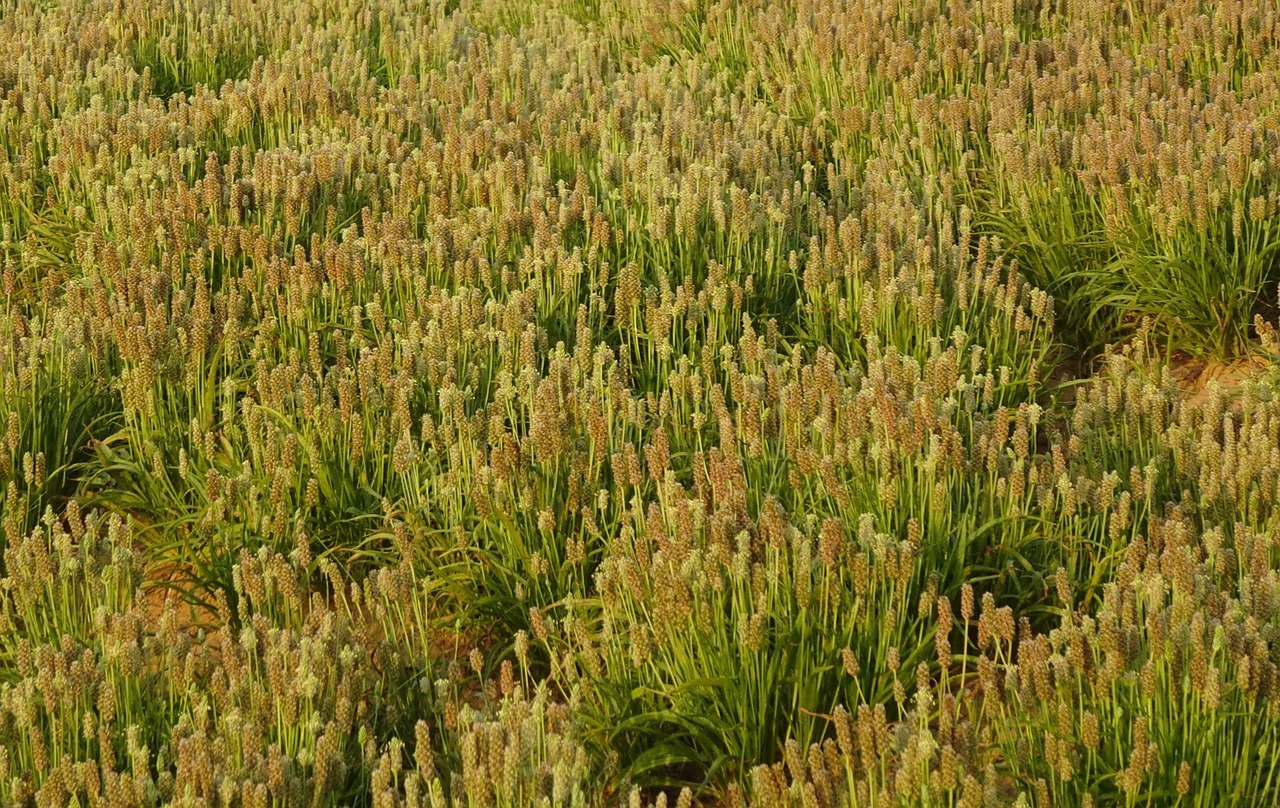
- Sowing: Seeds are sown in autumn, around October in India, either in rows or broadcast across the field.
- Harvest: After about four months, the crop is cut in the morning. Timing the harvest this way reduces seed shattering, when ripe seeds drop before they can be collected.
- Drying and threshing: The cut plants are dried for a few days, then threshed and winnowed to separate the seeds from the rest of the plant.
- Milling: The cleaned seeds go through a series of grinding mills that separate the husk from the seed. Vikaspedia puts the recovered husk at about 30 percent of the seed weight.
- Sorting and grinding: The husk is cleaned and graded by purity. Some is sold as whole husk, and some is ground further into the fine powder used in baking.
Key Finding
Only About a Quarter to a Third of the Seed Becomes Husk
The husk is a thin outer layer, so most of each seed’s weight is left behind after milling. The Alternative Field Crops Manual puts the mucilage-rich husk at about 25 percent or more of the seed yield, and Vikaspedia gives about 30 percent.
Psyllium Seed vs Psyllium Husk
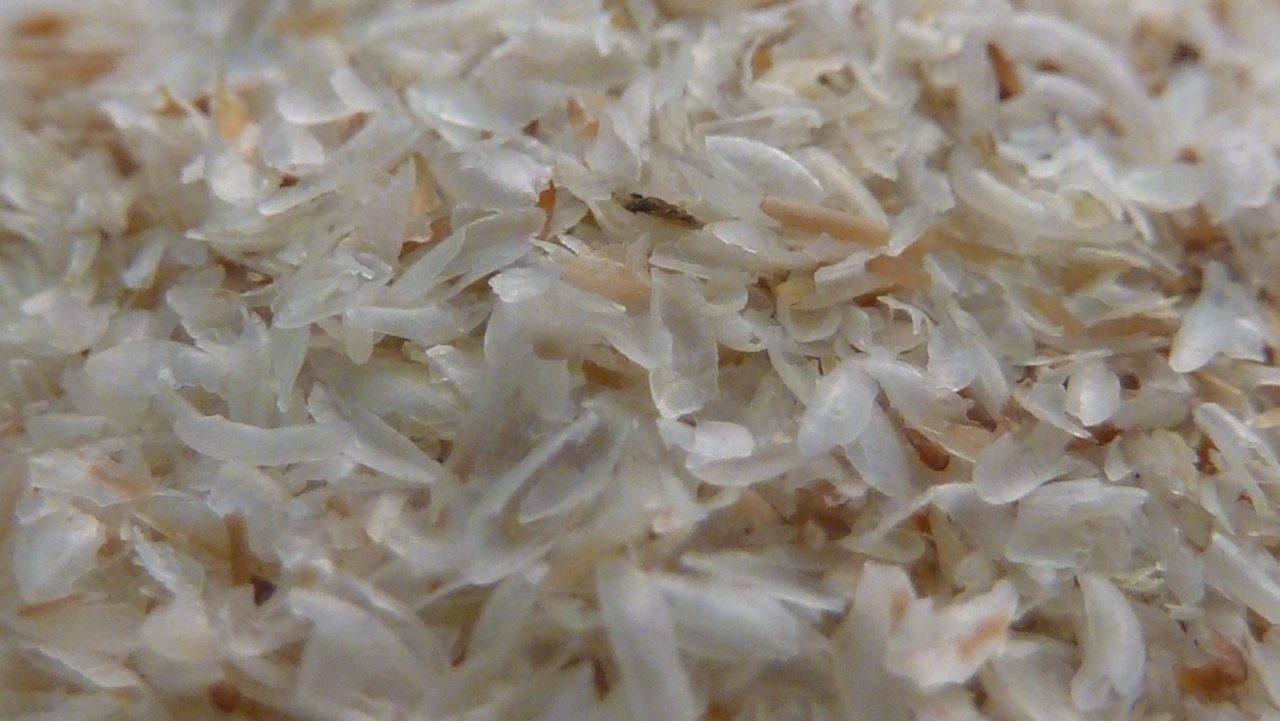
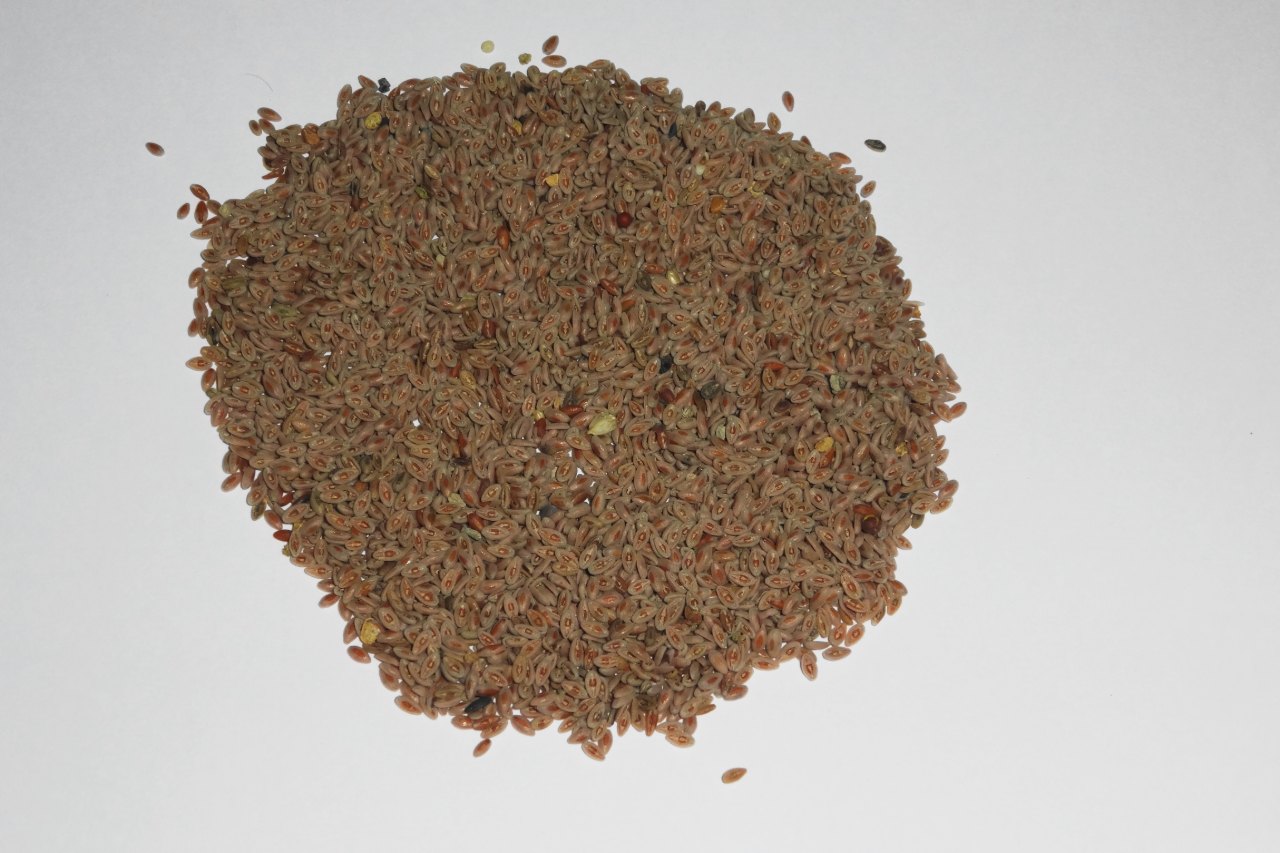
The seed and the husk are not the same product, even though the names are often used loosely. The husk is the outer coating, and it holds most of the gel-forming soluble fiber. The seed underneath is the part left after milling.
Most products you buy are husk, either whole or powdered. Labels that say “psyllium seed husk” mean the husk taken from the seed. Whole seed is a separate ingredient, so if a label says “seed/husk,” check the ingredient list or ask the maker. Products made from whole ground seed also exist. For baking, husk is what recipes mean, because it is the husk that gels and binds a dough. Our powder vs whole husk comparison covers the two forms of husk you will see in stores.
Why the Husk Gels
The husk’s value comes from mucilage, a type of soluble fiber that absorbs water and forms a soft, flexible gel. In wild Plantago species, research links more seed mucilage to better germination and seedling survival in dry conditions. In the kitchen, the same property lets a small amount of psyllium bind a gluten-free dough, give a tortilla stretch or thicken a sauce. Our gluten-free baking guide shows how that gel is put to work.
Frequently Asked Questions
These are the questions people ask most often about the psyllium plant.
What Plant Does Psyllium Husk Come From?
Plantago ovata, a small annual herb in the plantain family, often called blond psyllium or isabgol.
Is Psyllium the Same as the Plantain in My Lawn?
They are relatives in the same genus, Plantago, but the common lawn plantains are different species and are not the source of psyllium husk.
Where Does Most Psyllium Come From?
India, mainly North Gujarat, which is the world’s largest producer and exporter.
Why Is It Called Psyllium?
The name comes from the Greek word for flea, psýlla, a reference to the size and shape of the seed.
Further Reading
- Psyllium (Alternative Field Crops Manual, University of Wisconsin)
- Isabgol (Vikaspedia, Government of India)
- Plantago ovata (Wikipedia)
- Plantago ovata (Plants of the World Online, Kew)
- Plantago psyllium (Plants of the World Online, Kew)
- Community Herbal Monograph on Plantago afra and Plantago indica, Semen (European Medicines Agency, superseded)
- Psyllium Monograph, Plantago ovata (Health Canada)
- Psyllium, word origin (Dictionary.com)
- Myxospermous Seed-Mucilage Quantity Correlates With Environmental Gradients Indicative of Water-Deficit Stress: Plantago Species as a Model (Plant and Soil, 2019)
- Broadleaf and Buckhorn Plantain (Michigan State University Extension)
- Psyllium Seeds (CooksInfo)
- Isabgol Processing (NIFTEM, Government of India)
- Psyllium Husk Powder Grades (Giriraj Psyllium)
- Psyllium Husk Guide (Diet Doctor)
- Image credit: “Desert indianwheat (Plantago Ovata),” photograph by Stacy Manson, National Park Service (2011), public domain, via Flickr
- Image credit: “Plantago ovata,” photograph by S. Rae (2011), resized, via Wikimedia Commons, licensed under CC BY 2.0
- Image credit: “Psyllium crop field,” photograph by sarangib (2020), Pixabay Content License, via Pixabay
- Image credit: “Isabgol seeds,” photograph by Miansari66, CC0, via Wikimedia Commons
- Image credit: “Psyllium seed husks,” photograph by Bastique (Cary Bass) (2010), resized, via Wikimedia Commons, licensed under CC BY-SA 3.0